The Discovery of the Lost Placer
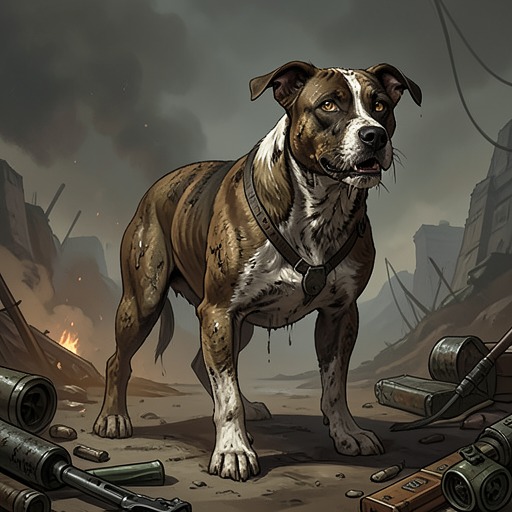
The Call of the WildThe Discovery of the Lost Placer is the decisive expedition of the final phase of Buck’s life with John Thornton. It begins after Buck’s extraordinary sled pull earns sixteen hundred dollars for Thornton, allowing him to pay certain debts and join Pete and Hans in pursuit of a legendary lost mine. The promised cabin is never found, but the search ends in a broad valley where gold lies across the bottom of the washing pan like yellow butter. The discovery changes the expedition from a quest governed by rumor and danger into a period of immense material success, while the long journey itself deepens Buck’s freedom and prepares the final break between the dog and the human world.
Causes and Background
The expedition is made possible by Buck’s achievement in earning sixteen hundred dollars for John Thornton in five minutes. That money enables Thornton to settle debts and turn toward a much older ambition: the search for a lost mine whose story has become part of the history of the Northland. The legend centers on an ancient, ramshackle cabin and a placer whose gold was supposedly confirmed by dying men who produced nuggets unlike any known grade of gold in the region. Many had searched for the treasure; few had found anything, and several never returned. The tradition therefore gives the journey both an economic objective and a grave historical shadow.
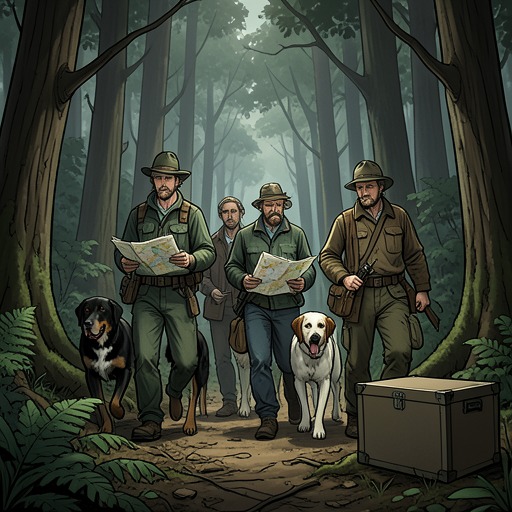
John Thornton undertakes the search with Pete, Hans, Buck, and about half a dozen other dogs. The party does not follow a secure commercial route or a clearly surveyed road. They sled seventy miles up the Yukon River, turn into the Stewart River, pass the Mayo and the McQuestion, and continue until the Stewart becomes a streamlet among the peaks forming the backbone of the continent. The route places the expedition beyond ordinary traffic and into a landscape where earlier human presence survives mainly as traces, fragments, and unanswered questions.
The Expedition’s Course
Thornton asks little of either men or nature and is unafraid of the wilderness. Carrying salt and a rifle, he can enter the forest and remain there as long as necessary, hunting food during the day and relying on the eventual abundance of the country if an immediate hunt fails. Ammunition and tools make up most of the sled’s load, while the party’s timetable is drawn upon the limitless future rather than upon commercial urgency. For Buck, this is a period of intense pleasure: hunting, fishing, and wandering through unfamiliar places replace the fixed demands of the mail trail.
The journey alternates between movement and prolonged work at temporary camps. For weeks the party travels steadily; for other weeks the dogs rest while the men burn holes through frozen muck and gravel and wash countless pans of dirt by the heat of the fire. Sometimes the party goes hungry, and sometimes it feasts according to the luck of the hunt. In summer, the men and dogs carry packs across blue mountain lakes and travel on unknown rivers in slender boats made from forest timber. The expedition thus depends on a flexible combination of sled travel, hunting, fishing, rafting, and manual prospecting rather than on one fixed method of advance.
The seasons impose their own chronology. The party crosses divides in summer blizzards, shivers beneath the midnight sun on bare mountains between the timber line and the eternal snows, and descends into summer valleys thick with gnats and flies. In the shadows of glaciers, the travelers find strawberries and flowers as ripe and fair as those of the Southland. In autumn they enter a silent lake country where the wild fowl have departed and ice begins to form in sheltered places. Through another winter they follow trails nearly erased by time, sharing the uncertainty of earlier travelers who had entered the wilderness and vanished from its record.
Traces of Earlier Travelers
The expedition repeatedly approaches the legend without resolving it. The party discovers an ancient path blazed through the forest, and for a moment the Lost Cabin seems near. Yet the path begins nowhere and ends nowhere, preserving the mystery of both the person who made it and the purpose for which it was made. The clue is valuable not because it answers the legend, but because it shows how much of human movement has been swallowed by the landscape.
At another point, John Thornton finds the wreckage of a hunting lodge. Among rotted blankets he discovers a long-barreled flintlock, identifiable as a Hudson Bay Company gun from the early Northwest period, when such a weapon was worth its weight in beaver skins packed flat. Nothing else identifies the hunter who built the lodge or explains why the gun was left behind. The object becomes a remnant without a biography, and the expedition’s search is surrounded by these material signs of lives that wilderness and time have removed.
Discovery and Material Consequences
Spring returns, but the Lost Cabin does not. Instead, at the end of the wandering, the travelers find a shallow placer in a broad valley. Gold appears across the washing pan, and the party abandons the search for anything farther. The discovery is not a modest indication of wealth: each day’s work produces thousands of dollars in clean dust and nuggets. The gold is packed into moosehide bags weighing fifty pounds each and piled outside the spruce-bough lodge like firewood.
This result reverses the expedition’s earlier uncertainty. The party had been sustained by rumor, endurance, and the possibility that the legend might be false; the placer converts those risks into an abundant return. John Thornton and his companions work every day, and the repeated accumulation of bags makes labor itself the visible measure of success. Yet the discovery does not restore Buck to a settled life. With the gold found and the men occupied, there is little for the dogs to do except haul meat from animals Thornton kills, leaving Buck long hours by the fire.
Buck’s Position in the Larger Story
The Lost Placer expedition gives Buck a form of freedom that differs from the freedom of the wolf pack. He remains attached to John Thornton, Pete, and Hans, but the group travels beyond regular trails and organized transport, moving according to hunting conditions, weather, rivers, and the uncertain geography of the search. The contrast is sharp with Buck’s earlier service in the government mail system, where dogs were harnessed to strict schedules, forced across the Chilkoot Divide and the Thirty Mile River, and driven toward Dawson and the Yukon Trail despite exhaustion, thin ice, and extreme cold.
The expedition also follows a broader animal and seasonal geography. The Northland’s gold rush has created demand for powerful dogs, while government routes and camps organize animal labor around transport. In the wilderness beyond those systems, the movement of moose, the changing seasons, frozen rivers, and the availability of game determine the party’s existence. Buck’s later hunting of a great bull moose, standing more than six feet high with fourteen-point antlers spanning seven feet, belongs to the same widening world in which he increasingly acts according to inherited hunting instincts rather than human commands.
The event’s consequences become most apparent after John Thornton’s death. When the Yeehats attack the camp, Buck finds Hans among the dead and sees the spruce-bough lodge destroyed; his rage drives him against the attackers. Later, when the wolf pack enters the valley, Buck defeats its first challengers, recognizes the wild brother with whom he once ran, and joins the pack after learning that John Thornton is dead. The lost placer therefore becomes more than a successful mining venture. Its valley remains the place of human wealth, human violence, and Buck’s final memory of the man he loved.
Narrative and Thematic Significance
The event combines the frontier promise of resource discovery with the costs of entering and occupying an already inhabited wilderness. The expedition treats rivers, mountains, old paths, abandoned lodges, gold-bearing ground, and animal migrations as parts of a territory available to determined seekers. Its success is measured in sacks of gold, while the later violence of the Yeehats and the emergence of the Ghost Dog show that human claims to the valley are neither permanent nor secure.
Structurally, the search is a delayed fulfillment. The Lost Cabin is introduced as a mystery inherited from dead prospectors and half-erased travelers, and the narrative sustains that mystery through incomplete paths and abandoned objects. The actual reward arrives in altered form: not the legendary cabin, but the shallow placer. That substitution preserves the romance of discovery while refusing a neat recovery of the past. The explorers gain wealth, but they do not master the history of the land.
For Buck, the gold is less important than the life made possible by the search. The expedition releases him from repetitive transport labor into hunting, fishing, roaming, and contact with the wilderness. When John Thornton is gone, the last human bond holding him to camp disappears, and the call of the wolves becomes irresistible. In the valley where the gold once lay exposed, Buck later returns alone, howls mournfully, and leaves again. The placer thus marks both the height of human fortune and the landscape in which Buck’s human story ends and his legend as the Ghost Dog begins.